
Skip to content

Lawn Rollers

Late March, the lawn is out of dormancy, and the surface that looked level last October has frost bumps across the front section where the freeze-thaw cycle pushed the turf off its root contact. The same unevenness shows up on freshly overseeded areas where soil settled around the seed, and on new sod that needs pressing into the grade after installation. A lawn roller is the one pass that corrects what winter or installation left uneven.

From the Maxim 36-inch tow-behind for standard lawn tractors on residential lots, through the 48-inch tow-behind for larger property coverage, and the 48-inch 3-point hitch model for farm tractor setups, this collection covers three steel drum configurations for owners who tow rather than push. All three drums fill with water or sand for ballast, and the right choice depends on property size and hitch type.

Lawn Roller Width, Hitch Type, and Right Rolling Window

Rolling Width and Coverage: Matching Lawn Roller to Property Size

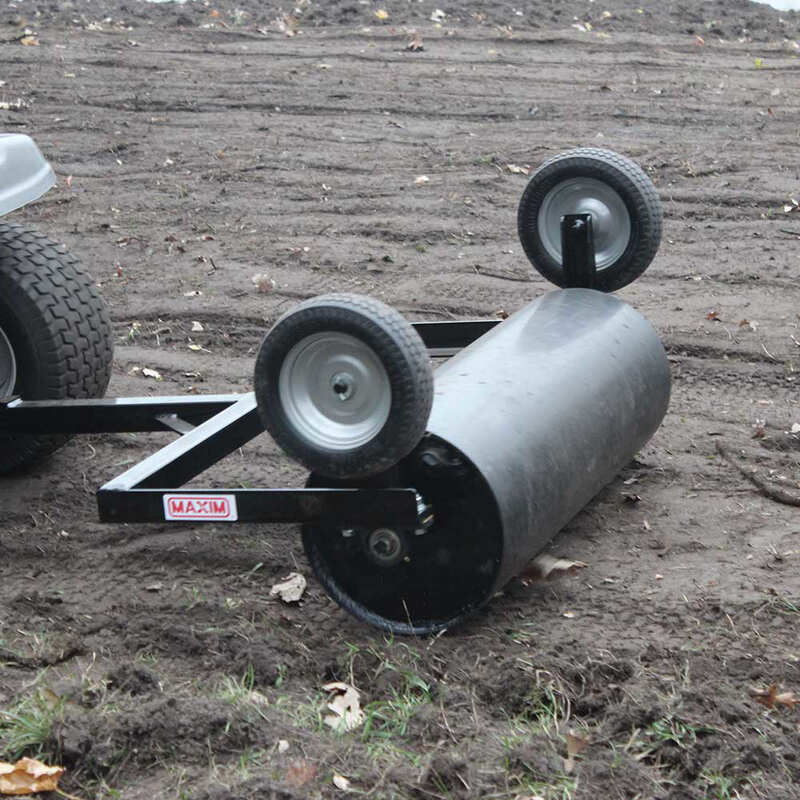
  • 36-inch for residential lots under an acre: The 36-inch tow behind lawn roller covers a 36-inch swath per lap and handles the maneuverability residential lawns require, meaning homeowners complete a full spring leveling pass without a second tractor run to cover what the drum missed.
  • 48-inch for larger properties and faster sessions: The 48-inch heavy duty lawn roller adds 12 inches of coverage per pass, meaning properties over an acre complete leveling and overseeding prep in fewer laps without a return route to cover sections the narrower drum misses.
  • Fill weight determines leveling force: Both tow-behind configurations fill with water or sand for ballast, meaning the roller presses frost-heaved turf into root-zone contact and seats broadcast seed rather than riding over surface unevenness without correcting it.

On a spring prep day, the dethatcher runs first, the aerators open the soil surface next, and the roller completes the sequence by pressing the prepared surface and any seeded areas back into contact with the grade.

Tow-Behind vs 3-Point Hitch: Matching Configuration to Tow Vehicle

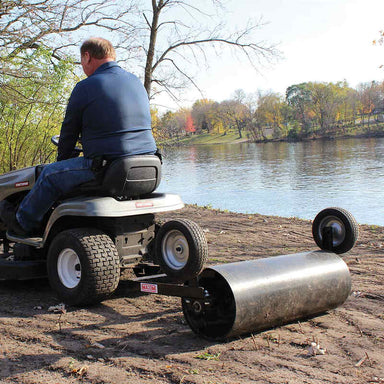
  • Standard hitch for lawn tractors and ATVs: The 36-inch and 48-inch tow-behind models attach to any standard receiver hitch on a lawn tractor, ATV, or UTV without an adapter, meaning operators get full roller functionality from the tow vehicle already in the shed.
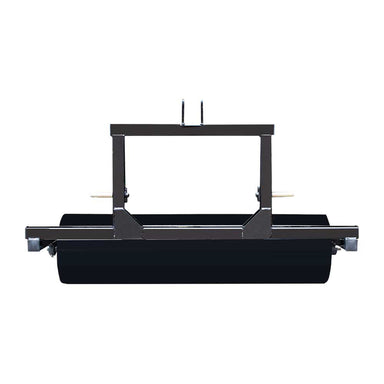
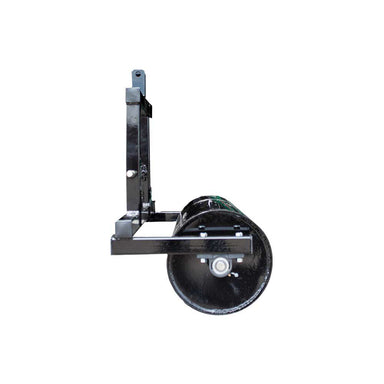
  • 3-point hitch for farm tractor setups: The Maxim 48-inch commercial lawn roller connects directly to a category-I or category-II tractor hitch, meaning farm tractor operators get a rigid connection that eliminates the chain movement a ball-hitch pull behind lawn roller introduces on uneven ground.
  • When the 3-point model is the right call: Farm tractor operators get better tracking consistency with a direct hitch connection than a chain attachment provides on sloped terrain, meaning the 3-point configuration earns its cost on any property where rolling precision across the full pass matters.
According to University of Minnesota Extension, rolling cool-season lawns in early spring once soil has thawed and retains moisture restores root-to-soil contact after frost heave, with a single pass sufficient for moderate heave conditions before the growing season begins.

For the seed broadcast pass that runs before rolling on overseeding days, the spreaders collection covers the broadcast and drop configurations used in that same workflow.

When a Lawn Roller Helps and When It Is Not the Right Tool

  • Right for frost heave recovery and overseeding prep: Cool-season lawns showing raised, spongy sections after winter are the core use case, meaning a single early-spring pass with a filled steel lawn roller restores the root contact that fertilizer and irrigation alone cannot recover without mechanical pressing.
  • Right for new sod and overseeding programs: Rolling after a seed broadcast increases seed-to-soil contact and germination rates, and pressing new sod into grade before root establishment begins, meaning the roller belongs in every overseeding and sod installation workflow.
  • Not right for isolated bumps or saturated ground: A single raised section is an acreage rake and topdress problem, not a rolling problem. For one-time use, renting locally is the honest answer before annual ownership pays off. Rolling waterlogged or bone-dry soil compacts rather than levels.

For lawn replacement projects, the sod cutter collection covers the turf removal step that precedes the rolling pass on full renovation work.

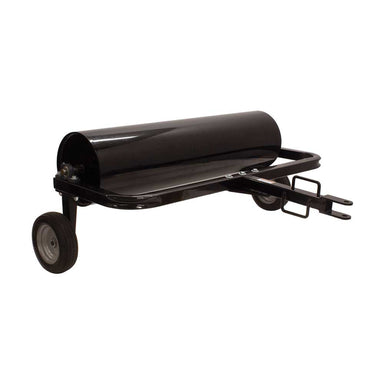
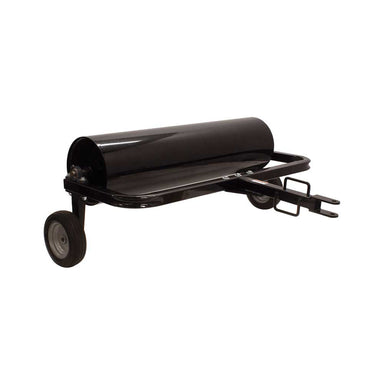
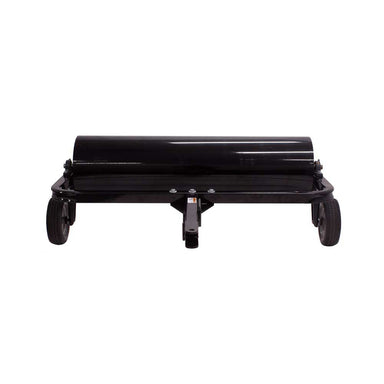
Maxim 36-in Tow-Behind Lawn Roller
Residential lot, standard lawn tractor or ATV Maxim 36-in. Tow-Behind Lawn Roller
Maxim 48-in Tow-Behind Lawn Roller
Larger property, faster coverage per pass Maxim 48-in. Tow-Behind Lawn Roller
Maxim 48-in 3-Point Hitch Lawn Roller
Farm tractor with 3-point hitch Maxim 48-in. 3-Point Hitch Lawn Roller
One-time frost heave repair, small lot Rent locally. Single-season use does not support ownership.
Push lawn roller for small area, no tow vehicle These tow-behind models require a tow vehicle. Push rollers are a separate walk-behind category.

Top Tow-Behind Lawn Rollers for Sale

Best Tow-Behind Lawn Roller for Residential Lots

Maxim Lawn Roller | 36-In. Tow-Behind

Maxim Lawn Roller 36-In Tow-Behind

Homeowners with a standard lawn tractor or ATV on a residential lot get the 36-inch drum width and standard hitch attachment for spring leveling and overseeding prep without paying for capacity the property does not need.

  • 36-inch steel drum fills with water or sand for adjustable ballast, covering residential lots in a single tow pass for frost heave correction, sod pressing, and seed-to-soil contact after overseeding

  • Standard tow-behind hitch connects to any lawn tractor, ATV, or UTV without an adapter, running on the same tow vehicle used for seasonal passes already

  • 36-inch width navigates tighter lawn sections and property edges where wider configurations require additional maneuvering to cover the same ground

Best Heavy Duty Lawn Roller for Larger Property Coverage

Maxim Lawn Roller | 48-In. Tow-Behind

Maxim Lawn Roller 48-In Tow-Behind

The buyer running the 36-inch drum on a property over an acre already knows the problem: every spring leveling session runs a second lap that the 48-inch eliminates entirely.

  • 48-inch steel drum adds 12 inches of coverage per tow pass, meaning larger properties finish leveling and overseeding prep in fewer laps without a return run to pick up sections the narrower drum misses

  • Higher fill capacity delivers greater ballast weight, meaning the heavy duty lawn roller presses frost-heaved turf and broadcast seed into contact more completely on the first run rather than requiring a second crossing

  • Tow-behind hitch fits the same lawn tractor or ATV as the 36-inch model, with fill material movable using a garden trailer on the same property day

Best Commercial Lawn Roller for Farm Tractor Configurations

Maxim Lawn Roller | 48-In. | 3-Point Hitch

Maxim Lawn Roller 48-In 3-Point Hitch

Standard tow-behind attachments on farm tractors use chain connections that introduce lateral movement across uneven ground. The 3-point hitch model removes that variable from every pass.

  • 48-inch steel drum on a direct 3-point hitch eliminates the chain drift a pull-behind attachment introduces, meaning commercial lawn roller passes track consistently across sloped and uneven sections without correction stops

  • Category-I and category-II 3-point compatibility fits the full range of farm tractor configurations for large acreage, paddock, and commercial turf work without a separate hitch adapter

  • For properties using a powered wheelbarrow to move sand or topsoil fill to low spots before rolling, the 3-point model completes the leveling sequence on the same tractor running the fill-moving pass

Why Buy a Lawn Roller from Root Revive Direct

  • Width and Hitch Fit Confirmed Before Ship Pre-purchase support matches drum width and hitch type to property size and tow vehicle before the order processes, meaning the wrong-configuration scenario is caught before shipping, not after delivery.
  • Authorized Maxim Dealer Every roller ships with full Maxim manufacturer warranty under authorized dealer terms, with no third-party sourcing or grey-market gaps on any machine in the collection.
  • Free Return Shipping If a roller arrives wrong for the tow vehicle or property size, return shipping and restocking are covered so fit-risk stays with the dealer, not the buyer.

What Property Owners Ask Before Buying a Lawn Roller

What does a lawn roller do?

A lawn roller presses uneven turf back into root contact after frost heave, seats broadcast seed into soil after overseeding, and presses new sod into grade after installation. The filled steel drum applies mechanical force that mowing and watering alone cannot deliver.

When should I roll my lawn: spring or fall?

Spring is the primary window for cool-season lawns. Roll after soil has fully thawed and is moist but not saturated, before active growth begins. Fall rolling pairs with overseeding programs. Rolling on waterlogged or bone-dry ground causes compaction rather than leveling.

Is the 48-inch worth the upgrade over the 36-inch?

For lawns under an acre, the 36-inch completes the leveling and overseeding-prep pass in one session. Above an acre, the 48-inch saves a full return lap each season and pays for the upgrade across two or three spring and fall rolling cycles in time savings alone.

Can a lawn roller create stripes?

Yes. Rolling in straight parallel passes bends grass blades in alternating directions, creating light-and-dark stripe patterns. Reversing direction on each pass deepens the contrast. A lawn striping roller pass works on the same schedule as leveling, no separate attachment required.

What should I know before buying my first lawn roller?

Fill the steel drum with water for rolling passes and drain completely before winter storage. Drums stored full through freezing temperatures can crack. Roll only when soil is moist but firm. For tractor-pulled use on any property over half an acre, tow-behind is the correct category.

Get the Lawn Roller Running Before Spring Growth Covers Damage

Frost bumps that show up in late March are a soil-contact problem, not a watering problem. A tow-behind lawn roller pass in early spring, once the ground has thawed and is firm enough to roll without compacting, presses the surface back into root contact before the growing season gets ahead of what is still uneven underneath.

Have Questions? We're Here to Help.

Our team is available Monday through Sunday, 9 AM – 6 PM EST.