
Skip to content

Tow Behind Log Splitter for Sale

A cord of seasoned oak is sitting in the back lot, the splitting wedge is in the barn behind the house, and the tractor that has to pull both of them is parked at the home end of the property. That is the situation a tow behind log splitter is built for: a machine that moves with you between the woodlot, the storage yard, and wherever the firewood is actually getting stacked.

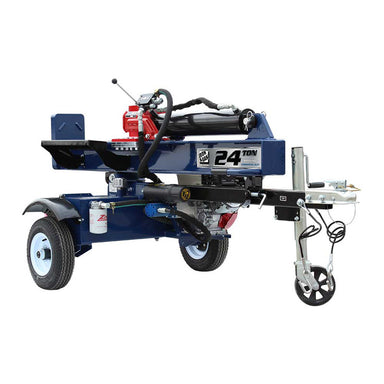
A tow behind log splitter pairs hydraulic splitting force with a road-legal log splitter trailer, so the same machine that handles a 30-inch oak round in the morning can hitch to a pickup and roll to the next site by lunch. The lineup here covers 24-ton homeowner-grade configurations through 30-ton and 37-ton commercial-duty units rated for daily firewood operations.


How to Choose the Right Towable Log Splitter

Log Splitter Towable Tonnage and Log Diameter Capacity

  • Hardwood under 20 inches: A 24-ton log splitter towable handles oak, maple, and hickory rounds up to 20 inches across without stalling, which covers the diameter range most homeowner firewood operations actually run.
  • Large-diameter and knotty hardwoods: Elm, cherry, and rounds above 20 inches with pronounced knots split harder, and a 28 to 30-ton pull behind log splitter delivers the hydraulic margin to push through in one pass.
  • Green wood vs seasoned wood: Green wood requires meaningfully more splitting force than seasoned wood at the same diameter, so plan tonnage on the highest-resistance load you actually expect rather than the average round.

Log Splitter Trailer Specifications, Hitch, and Tow Vehicle Compatibility

  • Trailer frame and DOT lighting: Road-legal log splitter trailers ship with DOT-compliant lighting, a torsion or leaf-spring axle, and a standard 2-inch ball coupler that fits most pickup, ATV, and UTV hitch receivers.
  • Tongue weight and tow vehicle rating: A 24-ton tow-behind unit weighs roughly 700 to 900 lbs loaded, so the tow vehicle's tongue capacity and hitch class need to match before the first trip out.
  • Speed ratings for highway towing: Most consumer tow-behind hydraulic log splitter trailers carry a 45 mph maximum tow rating, appropriate for county roads and short highway runs but not interstate-speed freight or sustained over-the-road towing.

Hydraulic Cycle Time and Pull Behind Log Splitter Engine Options

  • Cycle time and throughput: Cycle time — the seconds for the wedge to extend and return — determines how many rounds you process per hour, with 12 to 14 second cycles standard on commercial pull behind log splitters and slower cycles on homeowner models.
  • Two-stage hydraulic pumps: Two-stage pumps run fast under light load and shift to high-force mode under resistance; the U.S. Energy Information Administration estimates 11 million American households heat at least partly with wood, which makes faster cycle times directly meaningful.
  • Honda GC and GX-series engines: Honda GC190, GX160, GX200, and GX270 horizontal-shaft engines are the reliability standard on towable log splitter configurations, with established service intervals, parts availability, and broad dealer support across the industry.

For operators with a fixed processing location, the skid mount log splitters collection covers the same tonnage range without the trailer frame, and the parent log splitters catalog covers stationary configurations alongside log splitter towable models.

Tow Vehicle Compatibility For Pull Behind Log Splitters

Before selecting a tonnage, confirm the tow vehicle's rated capacity matches the loaded weight and tongue load of the splitter.

Splitter Tonnage Loaded Weight Tongue Weight (typical) Minimum Tow Vehicle
24-ton tow-behind 700–900 lbs 70–90 lbs Mid-size truck, full-size SUV, ATV/UTV rated to 1,000+ lbs trailer
30-ton tow-behind 950–1,150 lbs 95–115 lbs Full-size pickup, large UTV with rated hitch class, compact tractor with drawbar
37-ton tow-behind 1,200–1,400 lbs 120–140 lbs 1/2-ton or 3/4-ton pickup with Class III/IV hitch

Hitch class and tongue capacity vary by vehicle. Check the door-jamb sticker or owner's manual before towing.

Top Tow Behind Log Splitters for Sale

Best Entry-Level Tow Behind Log Splitter for Homeowner Firewood Production

Iron and Oak Log Splitter, 24-Ton, Honda GX160

Iron and Oak log splitter 24-ton Honda GX160

The Iron and Oak 24-Ton suits acreage owners and weekend firewood operators processing 3 to 6 cords of mixed hardwood per season. It pairs a Honda GX160 with a road-legal trailer frame for movement between the woodlot and the storage yard.

  • Delivers 24 tons of hydraulic splitting force across horizontal and vertical positions, suited to homeowner firewood production with mixed log diameters from oak to softwood

  • Honda GX160 horizontal-shaft engine paired with a two-stage hydraulic pump that compresses cycle time on light rounds while keeping full force in reserve

  • DOT-compliant log trailer with a 2-inch ball coupler, full lighting harness, and a torsion axle suited to rural-route and short highway towing

Best 30-Ton Pull Behind Log Splitter for Acreage and Commercial Operations

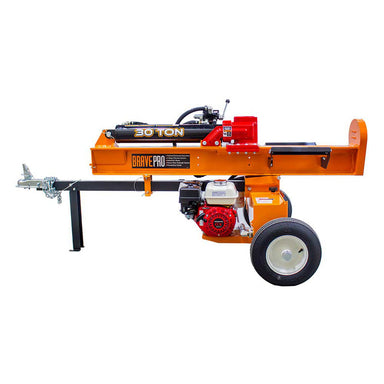
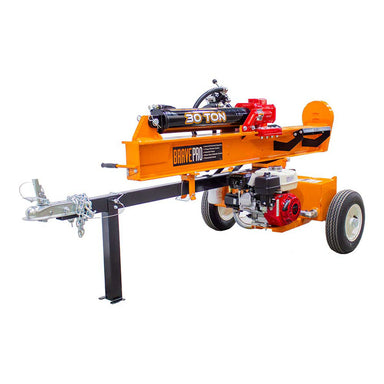
Brave Horizontal/Vertical Tow-Behind Log Splitter Series, 24-Ton/30-Ton/37-Ton, Honda

Brave tow-behind log splitter horizontal vertical Honda

The Brave Horizontal/Vertical Tow-Behind Series fits buyers who want tonnage flexibility, with 24, 30, and 37-ton configurations all on the same platform. The series pairs Honda engines with a versatile horizontal-vertical operating frame for mixed log sizes.

  • Three tonnage configurations (24, 30, 37-ton) on a single Brave tow-behind platform, scaling tonnage to wood species and seasonal operational volume

  • Honda GX-series and GC-series engines across the configuration range, paired with hydraulic systems sized for both homeowner and light-commercial firewood production schedules

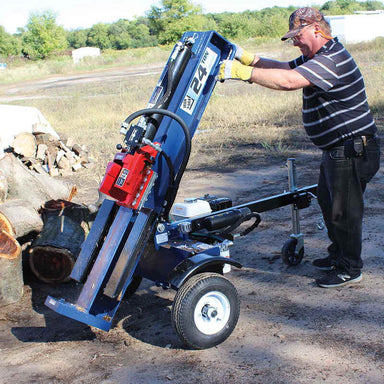
  • Horizontal-vertical operating positions handle large-diameter rounds vertically without lifting, while the horizontal mode supports faster production-rate splitting on standard hardwood firewood cuts

Best Tow-Behind Hydraulic Log Splitter for Heavy-Duty Operations

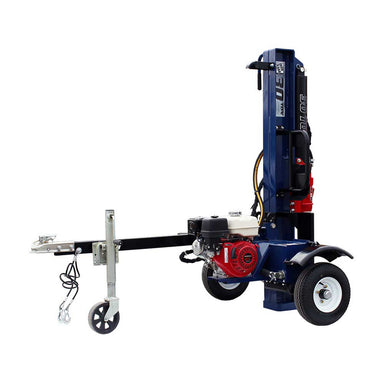
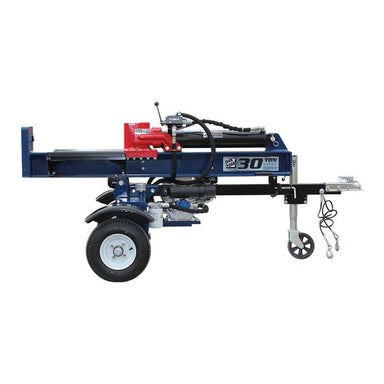
Iron and Oak Log Splitter, 30-Ton, Torsion Axle, Honda GX270

Iron and Oak log splitter 30-ton torsion axle Honda GX270

The Iron and Oak 30-Ton with torsion axle is built for commercial firewood operations and tree-service contractors moving the splitter daily across job sites. The torsion-axle frame and Honda GX270 deliver consistent performance through full-day commercial schedules.

  • Delivers 30 tons of splitting force with a Honda GX270 horizontal-shaft engine, sized for sustained commercial duty on hardwood and large-diameter rounds

  • Torsion-axle wood splitter trailer absorbs road shock better than leaf-spring axles, reducing stress on hydraulic components during over-the-road transport

  • Reinforced six-inch formed-steel beam rated for sustained commercial duty in both horizontal and vertical operating positions through full-day production schedules

Why Buy a Log Splitter Tow Behind from Root Revive Direct

A towable log splitter is a long-life equipment purchase, and the dealer relationship determines whether warranty service and parts support hold up over the decade or more this machine should run.

  • Authorized Dealer Every tow behind log splitter ships with manufacturer warranty backing because we are the authorized dealer for Iron and Oak, Brave, and other brands carried.
  • No Sales Tax Outside PA Orders shipped outside Pennsylvania go tax-free, and on a several-thousand-dollar splitter that saving reaches into the hundreds at checkout.
  • Free Return Shipping If a model arrives wrong for the operation, we cover return shipping and any restocking fees so the wrong-machine risk stays off the buyer.
  • Knowledgeable Support Pre-purchase questions about tongue weight, hitch class, or tonnage selection get answered by staff who know the equipment, seven days a week.

Your Tow Behind Log Splitter Questions Answered

What size tow behind log splitter do I need for home firewood production?

For 3 to 6 cords of mixed hardwood per season, a 24-ton tow-behind log splitter handles oak, maple, and hickory rounds up to 20 inches across without stalling. If your loads include knotty elm or rounds above 20 inches, step up to a 30 or 37-ton model.

Are towable log splitters road-legal for highway towing?

Most towable splitter trailers ship DOT-compliant with a 45 mph maximum tow rating, which covers county roads and short highway runs. They are not built for sustained interstate-speed freight. Confirm your state requirements on lighting and registration before extended over-the-road runs.

What is the difference between a pull behind log splitter and a skid mount log splitter?

A pull behind log splitter sits on a road-legal trailer frame so the machine moves between sites and across properties. A skid mount sits on a fixed frame for stationary processing in a barn or yard, costs less than an equivalent tow-behind, and pairs well with a skid steer.

Can I tow a log splitter trailer with an ATV or UTV?

Yes, most 24-ton log splitter trailer models ship with a 2-inch ball coupler that fits ATV and UTV hitches rated for the splitter's loaded weight, typically 700 to 900 lbs. Confirm the tow vehicle's tongue capacity matches before towing across uneven trails or job-site terrain.

How should I store a tow-behind hydraulic log splitter for the off-season?

Drain or stabilize the fuel, change the hydraulic filter on the recommended interval, grease the beam slide and pivot points, then cover the engine to keep moisture off. Park on level ground with the tongue jack supporting weight off the coupler through winter.

Match Your Tow Behind Log Splitter to Your Wood Volume

Whether the goal is heating a wood-burning home through one cold winter or supplying a commercial firewood operation through the year, the right tow behind log splitter pairs with the wood species, log diameter, and tow vehicle you actually run. The lineup here covers 24-ton homeowner-grade models through 30 and 37-ton commercial-duty configurations from Iron and Oak and Brave as authorized dealer.

Have Questions? We're Here to Help.

Our team is available Monday through Sunday, 9 AM – 6 PM EST.