
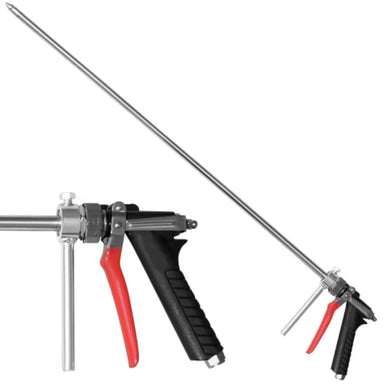
Tomahawk 28 in. Irrigation Rod Attachment with Handle Press for Backpack Sprayer - IR28 Tomahawk Power Irrigation Rod Attachment for Backpack ...
View full detailsThe pest control route has three commercial accounts in the same subdivision and a residential cluster before noon. A gas backpack sprayer covers the perimeter treatments on back-to-back accounts without battery runtime cutting the session short on the last property. A pest control sprayer matched to route volume and terrain keeps application consistent from the first account to the last without stopping to recharge or recalibrate between stops.
From the 4.75-gallon battery backpack for residential lawns and noise-sensitive commercial accounts, through the 5-gallon gas model for multi-hour pest control routes where runtime cannot be interrupted, through the Honda GX35 skid sprayer at 500 PSI and 100 feet of hose for vehicle-mounted large-acreage coverage, this collection covers the full range from residential spot treatment through commercial-scale pest and weed application.
Tomahawk 28 in. Irrigation Rod Attachment with Handle Press for Backpack Sprayer - IR28 Tomahawk Power Irrigation Rod Attachment for Backpack ...
View full details
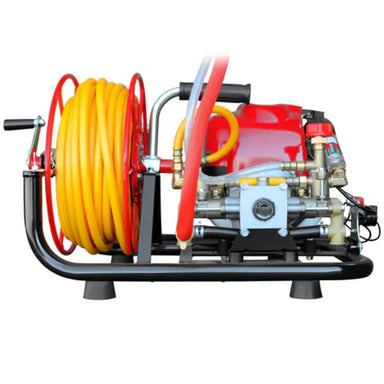
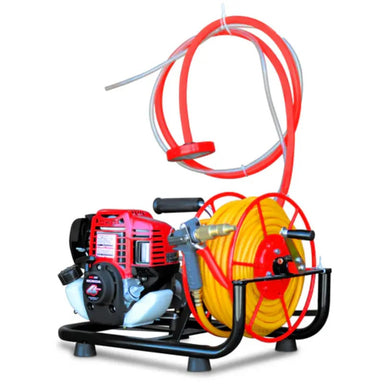
Tomahawk 1.6HP Skid Sprayer Barrel Mount Kit: Featuring Honda GX35 Engine, 100ft Hose, and 500 PSI Pump for Pest Control Tomahawk 1.6HP Skid S...
View full details
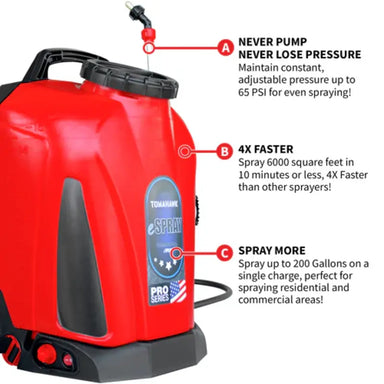
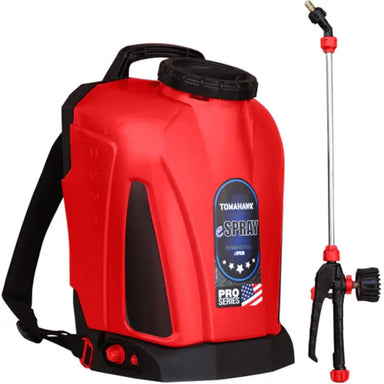
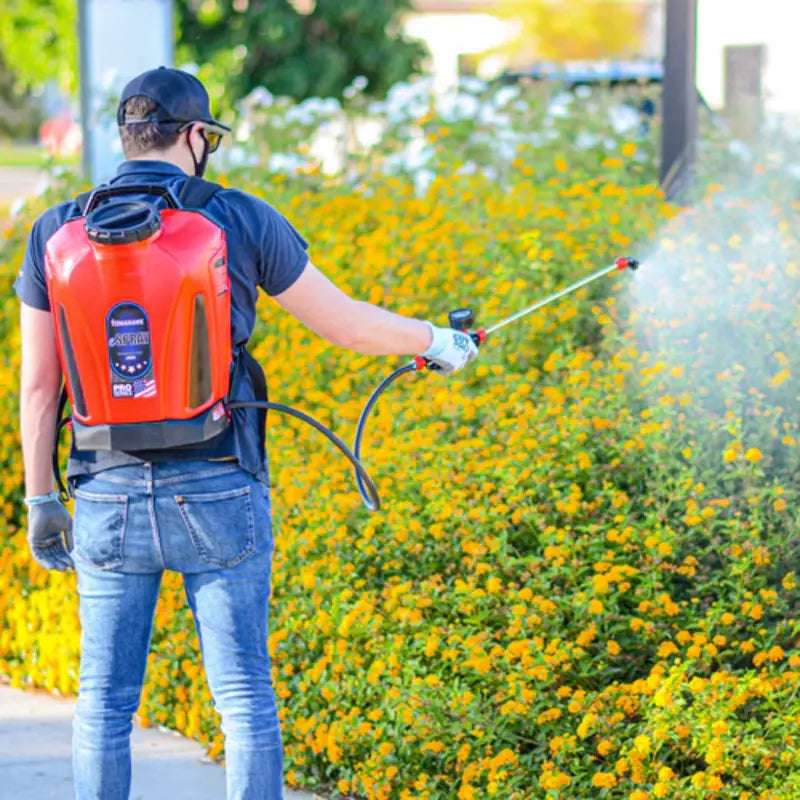
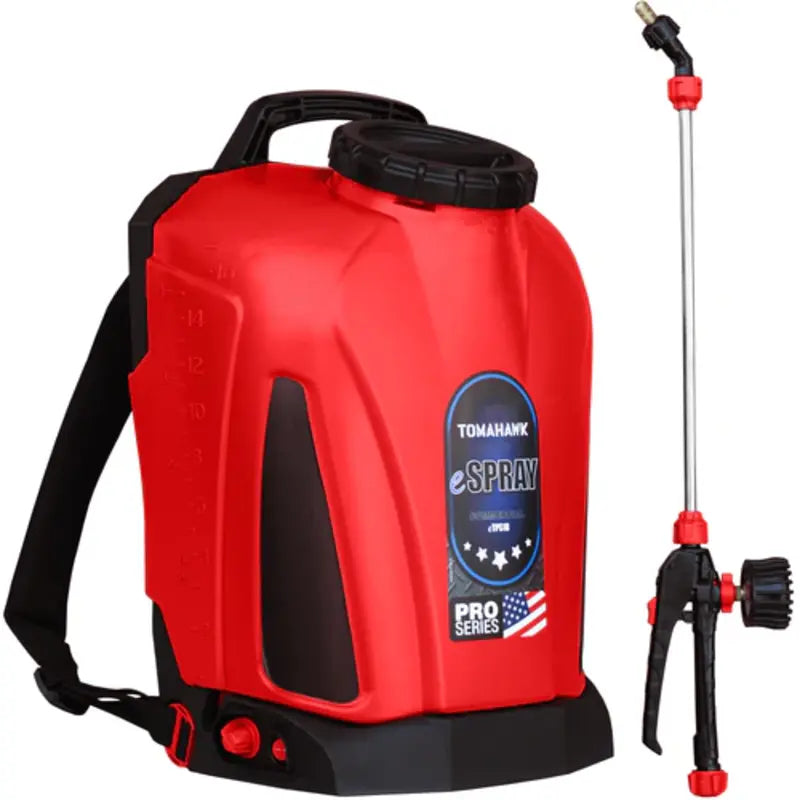
Tomahawk 4.75 Gallon Battery Powered Backpack Sprayer for Pest Control and Disinfectants - eTPS18 Tomahawk 4.75 Gallon Battery Powered Backpac...
View full details
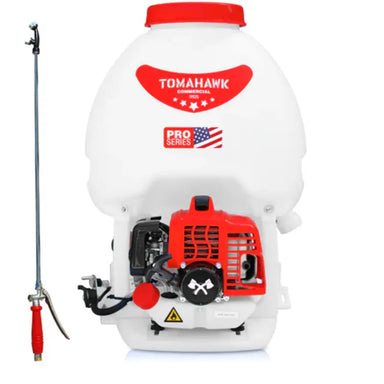
Tomahawk Power 5 gal. Gas-Powered Backpack Sprayer with Twin Tip Nozzle for Pesticide Tomahawk Power 5 Gallon Gas Backpack Tank Sprayer - Twin...
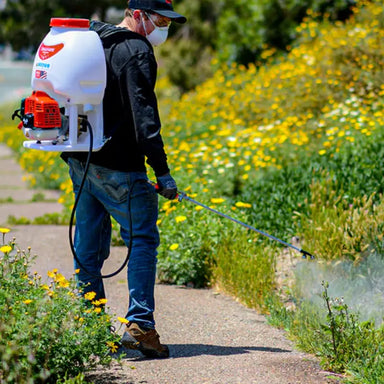
View full detailsGas backpack sprayer for extended runtime: A gas powered backpack pump sprayer runs continuous pump pressure without a battery ceiling, commercial pest control routes and multi-acre field sessions complete without a recharge stop cutting coverage short.
Battery backpack for residential and noise-sensitive use: The battery model runs without engine startup or exhaust near occupied spaces, coverage completes in residential environments and enclosed commercial areas where gas engine noise is not acceptable.
Pump sprayer for spot treatment on small areas: A backpack pump sprayer handles targeted applications under 500 square feet; for a handful of plants per season, a hand pump sprayer handles the job without powered equipment.
Before a spray session, cutting overgrowth with a brush cutter or rough-cut mower improves chemical contact on target vegetation and reduces drift on open-terrain passes.
4 gallon backpack sprayer capacity for residential programs: A 4 gallon backpack sprayer covers a standard residential lawn or perimeter in one session, most residential weed and pest control applications complete without a mid-property refill stop.
5-gallon gas model for commercial pest control routes: The 5-gallon tank keeps consistent pump pressure through a full commercial account, the backpack weed sprayer delivers broadcast herbicide coverage on large turf and pasture sections without pressure drop at low fill.
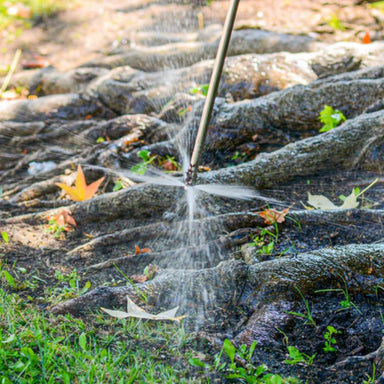
Irrigation rod for targeted bed and container watering: The irrigation rod attachment converts either backpack into a directed watering tool for raised beds and containers. The same unit runs herbicide one day and a targeted irrigation pass on another.
After a spray session, tow-behind spreaders deliver granular fertilizer on the treated area, and a blower clears debris ahead of follow-up passes.
500 PSI for dense vegetation and elevated spray zones: The skid sprayer's 500 PSI pump penetrates heavy vegetation and reaches elevated zones that a backpack leaves undertreated. Commercial operators get full coverage on target areas a walking-pace application cannot match.
100-foot hose reach for vehicle-mounted large-area coverage: The 100-foot hose covers ground a backpack operator on foot cannot match per session; the vehicle stays on the access road while the operator covers the treatment area on both sides.
Skid vs backpack pace on large commercial acreage: A backpack operator on foot costs more labor per acre than a skid unit from a truck; at commercial scale, the skid system earns out on the labor savings within a single season.
5-gallon gas tank maintains consistent pump pressure through back-to-back refills. A commercial pest control route runs start to finish without battery discharge reducing output on the last account
Twin tip nozzle delivers broadcast and directed spray patterns from the same unit, operators switch between perimeter and spot applications without swapping nozzle hardware mid-route
Gas runtime scales to session length rather than charge capacity, and a wood chipper handles cleared brush on the treated property before the follow-up spray pass
Honda GX35 engine delivers 500 PSI through a 100-foot hose for large-acreage pest and weed applications from a vehicle platform, covering ground a backpack operator cannot match in the same session window
500 PSI output penetrates dense vegetation and reaches elevated spray zones that backpack pressure leaves undertreated. Commercial operators complete full coverage on target areas a walking-pace application misses
Skid mount loads on a truck bed, ATV, or UTV platform, and a garden trailer handles chemical container and equipment transport on the same property route without additional vehicle trips
4.75-gallon tank covers residential lawns, garden perimeters, and light commercial accounts in cordless operation without engine startup, fuel management, or exhaust near the target area
Battery power eliminates carburetor service, fuel storage, and cold-start time, the unit is ready at the start of each spray program without seasonal engine prep before the first application
4.75-gallon capacity handles a standard residential property in one to two fills, and tow-behind spreaders apply granular fertilizer on the treated area after the spray application completes
For commercial pest control routes, the 5-gallon gas backpack maintains consistent pump pressure through back-to-back accounts without battery discharge. The battery model suits residential properties and noise-sensitive environments where shorter runtimes cover the full session.
Gas runs longer without a charge ceiling, suited for multi-hour field sessions and commercial routes. Battery is quieter and easier to start for residential applications. Runtime, noise, and application length determine the right choice for the specific program.
Standard backpack pesticide sprayer hold 3 to 5 gallons depending on the model. The 4.75-gallon battery model covers a standard residential lot in one to two fills. The 5-gallon gas model handles a commercial account in one fill at standard dilution and application rates.
A skid sprayer mounts on a truck bed, ATV, or UTV and delivers high-pressure application from a vehicle position. The 500 PSI output and 100-foot hose cover large areas without repositioning the vehicle. Used for pest control, roadside treatment, and large-field weed programs.
Yes, with a rinse procedure between chemistry changes. Triple-rinse the tank, hose, and nozzle when switching from herbicide to pesticide to prevent cross-contamination. Check chemical compatibility with the pump seals before using petroleum-based formulations.
The pest control route and the back-field weed program both have a window. A gas backpack sprayer in the right tank size and nozzle configuration covers commercial accounts back to back without battery discharge limiting coverage on the last property. The skid system covers the same scale from a vehicle when the acreage demands it.
Our team is available Monday through Sunday, 9 AM – 6 PM EST.