


A stump left behind after storm cleanup or a routine tree removal turns into a bigger decision than most property owners expect. How does a stump grinder work is the first question most property owners ask, and the answer is what separates a quick DIY job from an unnecessary hire.
That second option changes the math the moment more than one stump is involved. Root Revive Direct's stump grinders collection covers machines sized for a single backyard job up to a property with several stumps scattered across it. Understanding what the machine actually does first makes that decision a lot easier.
Key Takeaways
Stump grinding is a mechanical process, not a digging or pulling process. A rotating cutter wheel shaves the stump down into wood chips and sawdust, working from the outside edges inward until the stump disappears below the surrounding soil line.
That distinguishes it from stump removal, which typically means excavating the entire root ball out of the ground with heavy equipment. Grinding is faster, less disruptive to surrounding soil and nearby plants, and it's the method most walk-behind and self-propelled machines on the market are built to perform.

The cutter wheel is the core of the machine, a steel disc fitted with individually replaceable stump grinder teeth made of carbide, arranged in a spiral pattern around its edge. Carbide holds an edge far longer than standard steel, which matters given how much dirt and grit the teeth pass through on every job.
A hydraulic arm swings that wheel side to side across the stump face, and the operator lowers it in shallow increments rather than plunging straight down. Cutting in layers keeps the teeth from binding against dense wood or buried debris, and it's the same reason professionals rarely try to finish a stump in one aggressive pass.
Most machines finish a job somewhere between 6 and 12 inches below grade, which is deep enough that a mower or a new planting won't hit solid wood later. Reaching that depth on a wide stump means sweeping the wheel across the entire face repeatedly, not just cutting a single trench through the middle.

Backyard jobs and open acreage call for different machines, and most of the confusion around stump grinders comes down to matching size to property rather than any real difference in how the cutter wheel works.
A walk behind stump grinder is the standard choice for a homeowner with one or two stumps near the house, light enough to maneuver through a gate and compact enough to store in a shed between uses. A self-propelled model adds a drive system that moves the machine forward under power instead of requiring the operator to push it, which matters once several stumps or larger diameters are involved.
Tow-behind kits let either style travel between job sites without a trailer, useful for acreage owners covering ground beyond a single yard.
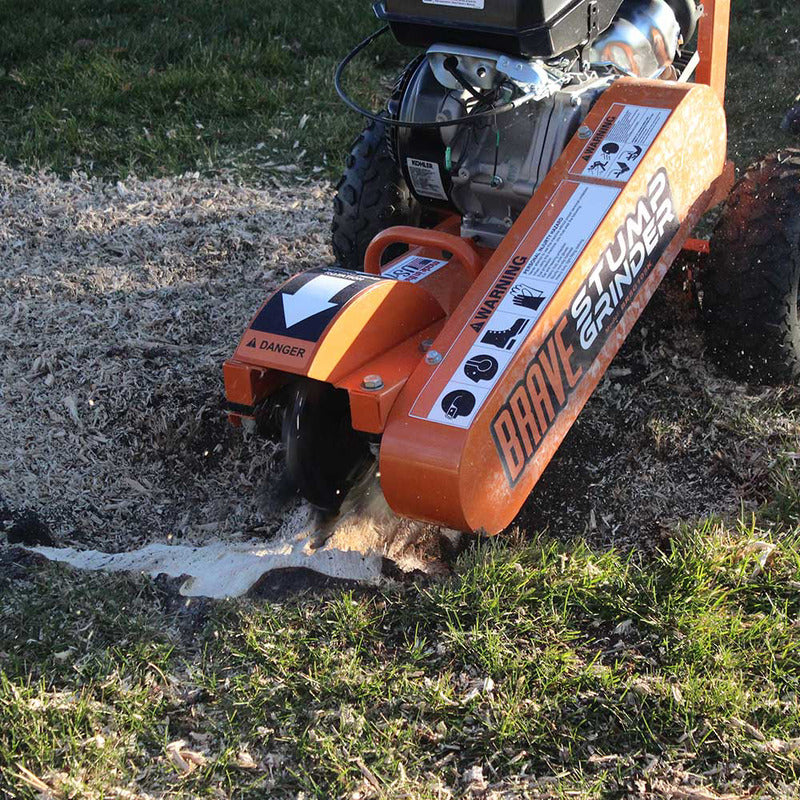
Brave Stump Grinder 14 HP Kohler
A walk-behind stump grinder built for homeowners handling one or two stumps at a time, cutting 9 inches below grade.
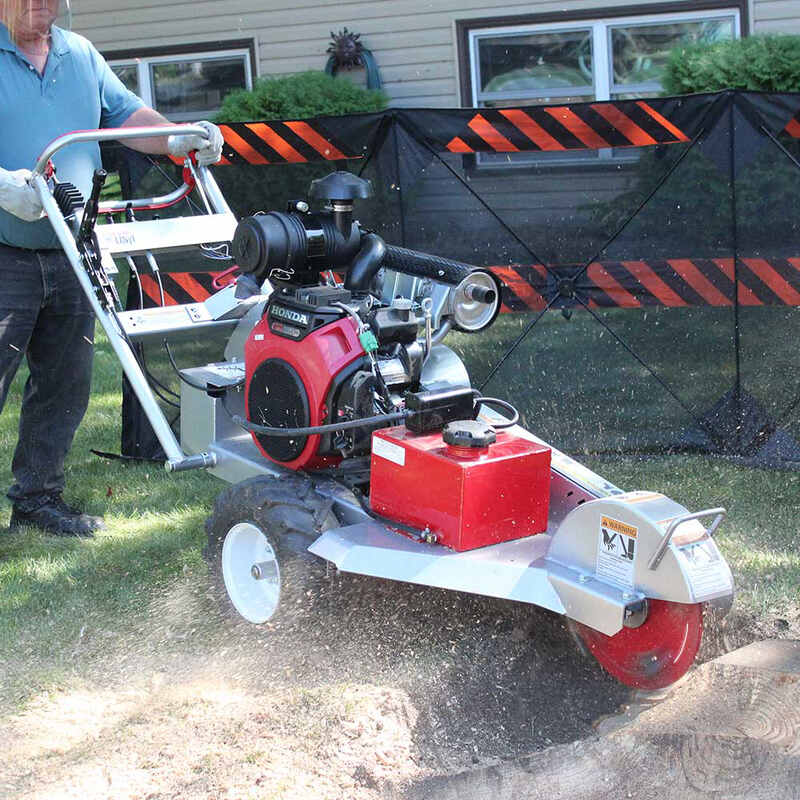
Dosko 691SP-20HE Self Propelled Stump Grinder
A self-propelled stump grinder suited to acreage owners working through multiple or larger stumps in a single session.
Shoppers comparing stump grinders for sale usually land on one of these two categories once they know how many stumps they're actually dealing with and how far the machine needs to travel between them.

Preparation matters more than most first-time operators expect. Clearing rocks, roots, and any buried debris from around the stump before starting protects the carbide teeth from unnecessary wear and reduces the chance of a kickback.
Pro tip: Walk the area around the stump before starting and clear any rocks, buried roots, or debris. Hitting one at full wheel speed is the most common cause of kickback and premature tooth wear.
Positioning the wheel a few inches above the stump and lowering it gradually into the wood, rather than dropping it straight down, keeps the cut controlled from the first pass. Working from one side of the stump to the other in shallow layers, then repeating at a slightly deeper depth, is what actually gets a wide stump down to grade rather than leaving a cone-shaped hole in the middle.
Flare roots radiating out from the base usually need a separate pass once the main stump is down, since they extend past the original stump's footprint. Backfilling the resulting hole with the ground wood chips and topsoil finishes the job.
Grinding removes the visible stump and the flare roots close to the surface, but it doesn't reach the full root system running underground. Deeper lateral roots and the tap root, where a species has one, generally stay in place because pulling them isn't part of what a grinder does.
Illinois Extension's Good Growing program puts a number on why full root excavation is such a different job than grinding. A root just a half inch in diameter requires roughly 450 pounds of force to pull from the soil, and structural roots coming off a stump base regularly exceed that diameter by a wide margin.
That force requirement is exactly why grinding targets the stump and flare roots rather than attempting to extract the whole system. The remaining roots break down naturally over time, and grinding well below grade removes enough of the structure that regrowth from most common landscape species becomes unlikely.

The choice between stump grinding vs stump removal comes down to whether the roots themselves are causing active damage, not just cosmetic issues. Full stump removal, pulling the entire root ball with an excavator or a winch, is a service built around jobs where the roots themselves are actively causing damage, like heaving a foundation or invading a septic line. For a stump sitting in open yard or field, that level of excavation is rarely necessary.
Grinding solves the practical problem for the vast majority of situations: a stump in the way of mowing, landscaping, or foot traffic. Once the mechanism is understood, the case for hiring it out gets harder to justify for anyone with more than a single stump on the property, since the same machine handles every future stump at no additional cost per job.
| Buyer Situation | Recommended Grinder |
|---|---|
| One or two stumps near the house, tight access | Brave Stump Grinder 14 HP Kohler (walk-behind) |
| Multiple stumps or larger diameters on open acreage | Dosko 691SP-20HE Self Propelled Stump Grinder |
| Traveling between multiple job sites without a trailer | Either model fitted with a tow-behind kit |
Stump grinding uses a rotating, carbide-toothed cutter wheel to shave a tree stump down into wood chips and sawdust rather than digging or pulling it out. The wheel works from the outside edges inward until the stump sits several inches below the surrounding soil line.
Most jobs finish somewhere between 6 and 12 inches below grade, deep enough that a mower or a new planting won't hit solid wood later. Reaching that depth on a wider stump requires sweeping the wheel across the full face in repeated, shallow passes rather than one deep plunge.
Grinding removes the stump and the flare roots near the surface, but deeper lateral roots and any tap root generally stay in the ground. A half-inch root takes about 450 pounds of force to pull, which is why full excavation is a separate, more involved job than grinding.
A walk-behind model suits one or two stumps near the house and stores easily between uses in a shed. A self-propelled model makes more sense for several stumps or larger diameters, since the drive system cuts down the physical effort needed across a longer grinding session.
No. Grinding shaves the stump down below grade and leaves deeper roots in place, while removal excavates the entire root ball out of the ground with heavy equipment. Grinding handles most yard and landscaping situations without the extra cost and disruption full removal causes.
Not immediately. The ground area needs backfilling with topsoil over the wood chips first, and grass seed or sod typically needs a few weeks to establish before the spot fully blends into the surrounding lawn and matches the existing grass in color and thickness.
Once the cutter wheel and the depth requirements make sense, a stump stops being a mystery and starts being a straightforward job with a clear process. Most yards and properties never need full root removal, just a grinder capable of reaching a few inches below grade.
For anyone facing down more than one stump, owning the equipment instead of paying a crew for each visit turns into the more practical choice fast. A walk-behind or self-propelled machine sized to the property handles every stump that shows up afterward, not just the one causing trouble today.